


This article for my In Case You’re Curious column is a few days late, but my husband encouraged me to post it because of how much time I put into it. I hope you enjoy, and I’d love to know your thoughts! Read the full article here.
Along with the beautiful decor and cold weather, the holiday season prompts this debate that many Christians are passionate about: why or why they don’t allow their children to partake in the Santa Claus tradition.
There are different camps of reasoning for why each person celebrates a certain way. And as someone who didn’t grow up with parents who taught her to believe in Santa, I was curious.
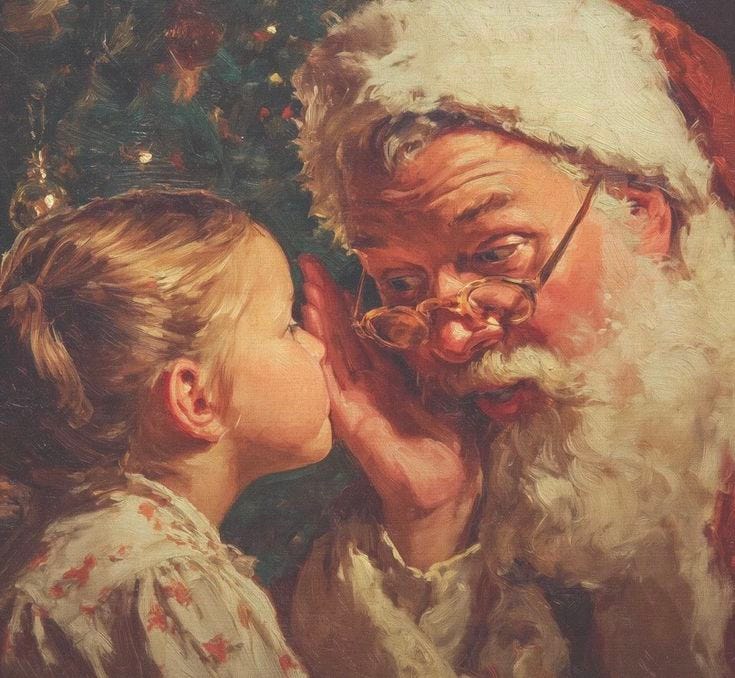
We asked Young Homemakers Club readers what their experience was growing up. I wanted to know what it was like being a child who whole-heartedly believed in Santa Claus.
Did you feel betrayed by your parents when you found out the truth about Santa Claus, that it was just something fun they did during Christmas? Or did it not matter to you?
And what if there was another camp outside of believing in Santa Claus or not? Can you enjoy the tradition while also keeping Jesus at the center?
I gained a new perspective on this topic as a whole and I wanted to share it with you because as women, we are usually the tradition-makers in our home.
We Asked, You Answered
Did you grow up with your parents teaching you to believe in Santa Claus?
I wasn’t told Santa was real. He existed, but never really came up at all. Presents were always from mom and dad. - Daisy
We were told he was not real from the start, but he was and is still very much part of the “magic” of Christmas. - Abby
My husband grew up believing in Santa and when we were dating I got to experience Santa for the first time when his parents tried to “catch” Santa- a beloved tradition they had when he was young. Now I have four kids, ages 9-2. We kept my husband’s childhood tradition because it feels magical AND we still keel Jesus at the center. - Cady
Did you feel betrayed when you found out that Santa wasn’t real?
“My sister felt so betrayed she ignored my parents for the whole day. My head just exploded when I found out and then I went on like dang and the magic of Christmas faded away” - Kay
“It was the most magical special experience of my childhood. Now that I have a child I’m going to incorporate more knowledge of the faith but keep the same magical Christmas experience. I remember I believed in it until I was so old maybe I was like 10? Then my parents were like you know he’s not real, you’re too old now, and I said yeah I kind of had a feeling and that was that 😂 less magical sense of wonder at that point but still loved Christmas and to this day I get 10x more joy and magical sense of wonder doing the Santa/elf traditions as a mother.” - Samantha
“When I found out as a kid I didn’t feel betrayed, but it took the magic out of it. Now with our own kids, we still believe in Santa (put out cookies and milk/reindeer food), but we have made Jesus/the Nativity the focal point, and have made all the magic around that vs Santa.” - Ashley
For more responses see here:
It’s interesting to see how different women grew up and how they parent their children now in contrast because of their experiences.
There seems to be a few different ways:
Keep the tradition of Santa Claus and have your children believe that this person is real and actually comes down the chimney to bring gifts.
Same as #1, but you also share about Jesus and do your best to keep Him at the center of celebrations.
Tell your children that Santa isn’t real, and only focus on Jesus.
Tell your children that Santa isn’t real, but still allow them to enjoy the story of Santa, and/or St. Nicholas, and keep Jesus at the center of the holiday.
Most Christians will land in #2-4, but my question to you is…is there a Biblical solution to whether we should celebrate or not? Leave your answer in the comments below!
Where Did Santa Claus Come From?
The Simplified History
I’m a protestant Christian. I grew up at, and currently go to, a Baptist church, but most identify with nondenominationalism. That being said, I never grew up learning about St. Nicholas.
I vaguely knew of this person because of Christmas songs and people sharing random facts with me, but it wasn’t until I researched him a few minutes ago that I understood his importance. As someone who loves history, I am fascinated by how the legend of Santa Claus came to be starting with this person.
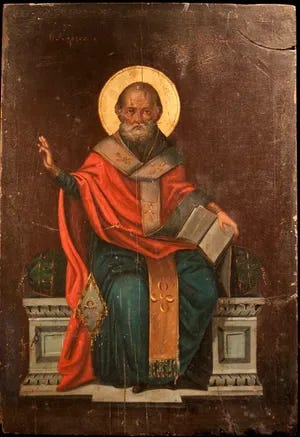
St. Nicholas was a Catholic Bishop from modern-day Turkey who was known for his charity and good deeds. He traveled throughout the country helping people who were poor and sick.
One of the best-known St. Nicholas stories is the time he saved three poor sisters from being sold into slavery or prostitution by their father by providing them with a dowry so they could marry.1
St. Nicholas’s popularity grew over time until he eventually became known as the primary Patron Saint of Children. If you don’t know what a patron saint is, neither did I:
patron saint, saint who is chosen as the dedicated protector and intercessor of a person, a society, a church, an occupation, or a place.2
He started to become popular in the United States when Dutch families came together to celebrate him on the anniversary of his death. His nickname Sinter Klaas came from the shortened Sint Nikolaas, which is Dutch for St. Nicholas.
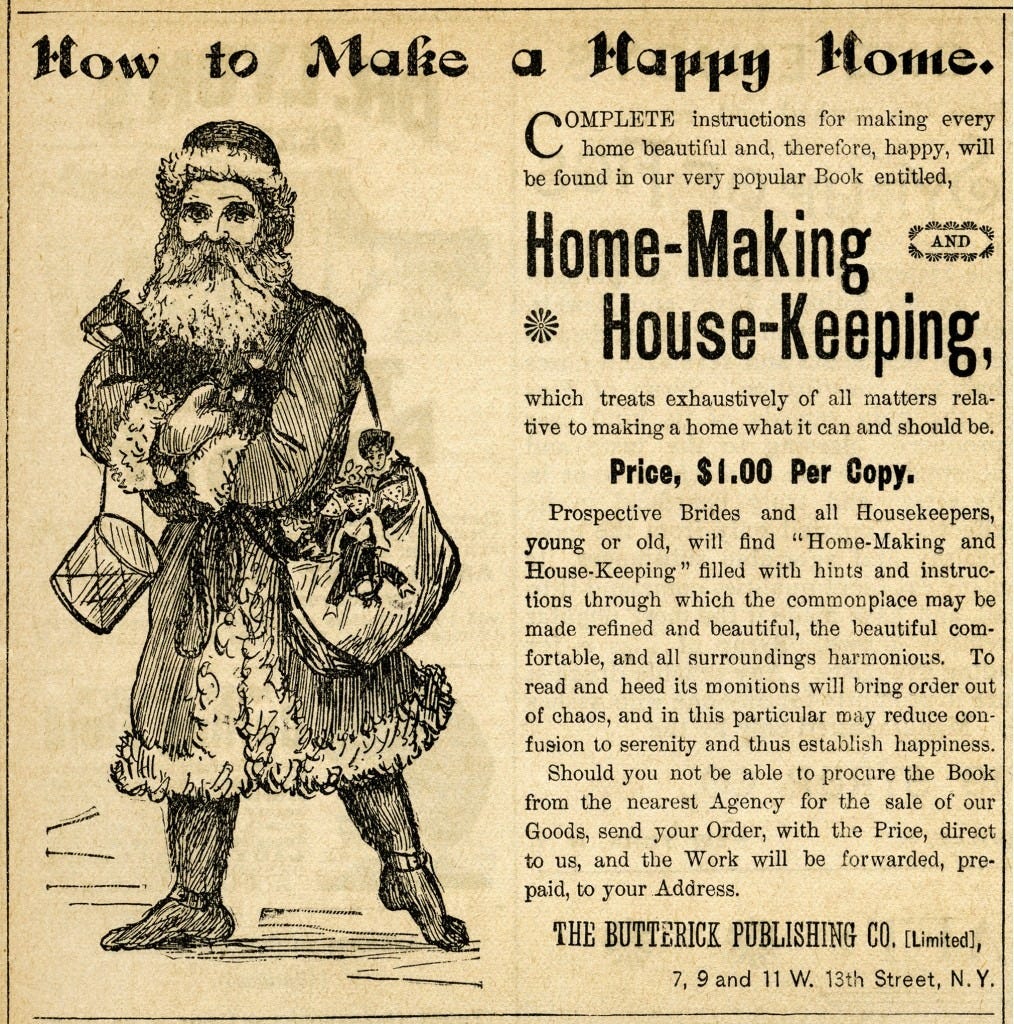
Overtime, many authors popularized Sinter Claus until his name evolved to Santa Claus. Advertisements, poems, books, movies, and new shopping mall Santas in New York all morphed together to turn into the jolly old man you see today.
Santa Claus’s current look was solidified after Clement Clarke Moore wrote the poem that we all know, “‘Twas the Night Before Christmas” for his three daughters, originally entitled “A Visit from St. Nicholas.” And thus was born the American icon - Santa Claus.
Should Christians Celebrate Santa Claus with Their Children?
I’m not a pastor or teacher, so obviously take everything I say with a grain of salt and consult the people who matter in teaching biblical topics. This is just purely opinion and how I came to this conclusion.
